









Quietspace vs Peel n Stick vs Cube: Which Acoustic Panels Are Best for Classrooms?

Good classroom acoustics are critical for learning. When reverberation is too high, speech becomes harder to understand, students lose focus, and teachers are forced to raise their voices throughout the day. Wall-mounted acoustic panels are one of the most effective ways to address this — but not all panels behave the same in real classrooms.
In this article, we compare three acoustic panel solutions commonly used in education environments, focusing on how they perform in practice rather than just on paper:
-
Quietspace Acoustic Panels
-
Peel n Stick Pinnable Acoustic Panels
-
Cube™ Acoustic Panels
Each solution approaches classroom acoustics differently, offering distinct advantages depending on room size, installation constraints, and how visible you want the treatment to be.
What Classrooms Actually Need from Acoustic Panels
Classrooms generate sound across a wide range of frequencies, from low-frequency background noise (chairs moving, HVAC systems) to mid and high-frequency speech sounds. An effective acoustic solution should:
-
reduce reverberation without making the room feel “dead”
-
work across different noise frequencies
-
withstand daily use
-
integrate visually into learning environments
-
suit school installation and budget constraints
The three panel types compared here meet these needs in different ways.
Quietspace Acoustic Panels: The Most Versatile and “Invisible” Solution
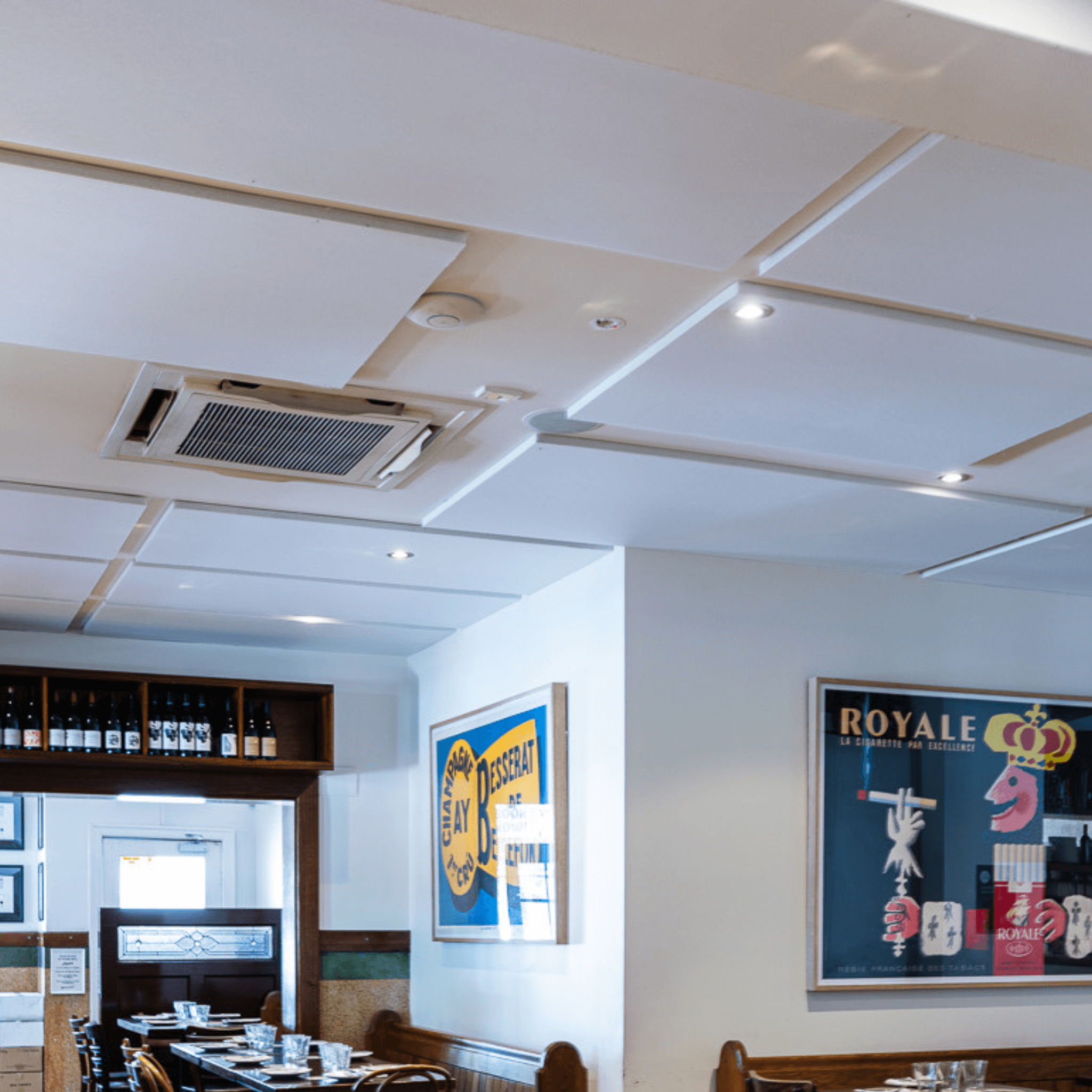
Quietspace panels are the most versatile acoustic option in this comparison. They can be installed on walls or ceilings, which allows them to be adapted to a wide range of classroom layouts and acoustic challenges.
Quietspace panels are often described as the most “invisible” acoustic solution. Their neutral appearance allows them to blend into the space, making the room feel like a classroom first — not an acoustically treated room. Where desired, they can also become decorative through printed finishes or Vertiface fabric overlays, giving schools flexibility between subtlety and expression.
From an acoustic perspective, Quietspace panels are available in larger formats and greater thicknesses, allowing them to absorb sound across a broader range of frequencies, including lower frequencies that thinner panels struggle to address. This makes them particularly effective in:
-
larger classrooms
-
rooms with hard finishes
-
spaces with higher ceilings
-
specialist learning areas where clarity is critical
Because fewer panels are required to achieve strong results, Quietspace is often specified where performance and flexibility are the priority.
Peel n Stick Pinnable Acoustic Panels: Practical, Coverage-Based Control
Peel n Stick panels are designed to be quick, practical, and classroom-friendly. They can be installed without trades, making them ideal for schools that need fast upgrades, staged rollouts, or minimal disruption.
These panels are thinner and provide moderate absorption per panel, but their effectiveness comes from coverage. When installed across larger wall areas, they help reduce overall reverberation and noise buildup in standard classrooms.
A key advantage in education environments is their pinnable surface, allowing them to function as both acoustic treatment and everyday classroom pinboards. This dual purpose makes them well suited to general teaching spaces and noticeboard walls.
From a frequency perspective, Peel n Stick panels are most effective at absorbing mid and high-frequency noise, such as speech reflections, while offering limited control over lower-frequency sound.
They are best suited to:
-
standard classrooms
-
budget-conscious projects
-
spaces where flexibility and functionality matter more than maximum absorption
Cube™ Acoustic Panels: A Strong Middle Ground
Cube panels sit between Quietspace and Peel n Stick in both performance and intent, making them a very strong classroom solution in their own right.
At 12 mm thickness, Cube panels are often comparable in price to Peel n Stick, while delivering a slightly higher NRC for the same thickness. This makes them a compelling option where schools want better acoustic performance without a significant cost increase.
At 24 mm thickness, Cube panels move into a higher-performance category, offering strong sound absorption that begins to approach thicker Quietspace solutions, particularly in the speech frequency range most critical for classrooms.
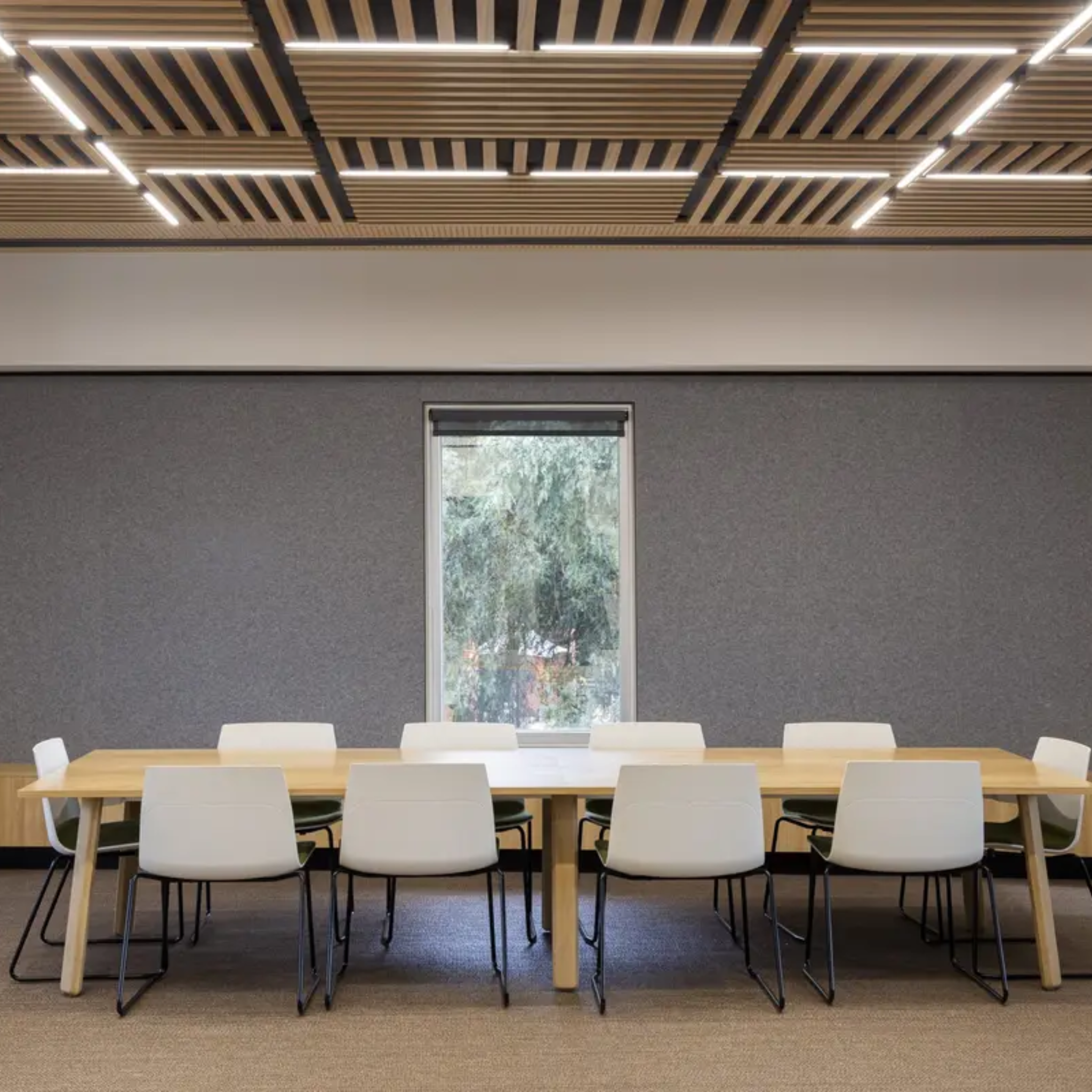
Cube panels also differ in presentation. They are designed to be seen, with clean, architectural lines and the option for printed graphics or visual finishes. This makes them well suited to:
-
modern classrooms
-
shared learning spaces
-
schools that want acoustics to contribute to visual engagement or identity
Acoustically, Cube panels perform well across mid and higher frequencies, with improved control as thickness increases
How These Panels Handle Different Types of Noise
While all three products improve classroom acoustics, they do so differently:
-
Quietspace panels absorb sound across a broader frequency range, including lower frequencies, making them more effective in larger or acoustically challenging rooms.
-
Cube panels perform strongly in the speech frequency range, with increased effectiveness as thickness increases, offering a flexible performance ladder.
-
Peel n Stick panels primarily target mid and high frequencies and rely on surface coverage to achieve noticeable improvement.
Understanding these differences helps ensure panels are specified for the type of noise present, not just the room size.
How to Choose the Right Option for Your Classroom
-
Choose Quietspace Acoustic Panels if you need maximum flexibility, strong reverberation control, and the option to treat walls or ceilings.
-
Choose Peel n Stick Pinnable Panels if you need a fast, functional solution that doubles as a pinboard and improves acoustics through coverage.
-
Choose Cube™ Acoustic Panels if you want a well-balanced solution that offers good performance at 12 mm and strong absorption at 24 mm, with greater visual presence.
In many schools, the best outcome comes from mixing approaches across different rooms rather than relying on a single product everywhere. If you’re planning a classroom upgrade, send us your room dimensions and photos and we’ll help you select the most effective panel solution for your space.